
In men’s shaving, no single tool suits everyone: a manual razor gives a closer, smoother shave, while an electric shaving machine is gentler if you keep getting razor bumps and ingrown hairs. Either way, the steps are much the same: wet the hair, apply shaving gel or foam, and shave in the direction of growth with a sharp blade. This guide covers the tools and how to shave without irritation, with picks from Gillette, Schick and Kemei.
Quick answer
- Wet your skin and hair with warm water before shaving, or shave at the end of your shower, because softened hair cuts more easily.
- Always use a shaving gel, cream or foam, and if your skin is sensitive, choose one labeled for sensitive skin.
- Shave in the direction your hair grows, rinse the blade after each swipe, and do not stretch your skin or press hard.
- Change your blade or throw away disposable razors after 5 to 7 shaves, and store your razor somewhere dry.
- If you keep getting razor bumps, a single-blade or electric razor may suit you better; if they persist, see a dermatologist.
Razor or electric shaver: which is better?
A razor is better if you want a very close shave; an electric shaver is better if you get frequent irritation or want speed. The American Academy of Dermatology (AAD) notes that a single-blade razor or an electric razor is often recommended for men who get razor bumps.
Manual razors
Razors come as disposables you throw away, or as handles with replaceable cartridges. More blades give a closer shave, but may not suit bump-prone skin. Options:
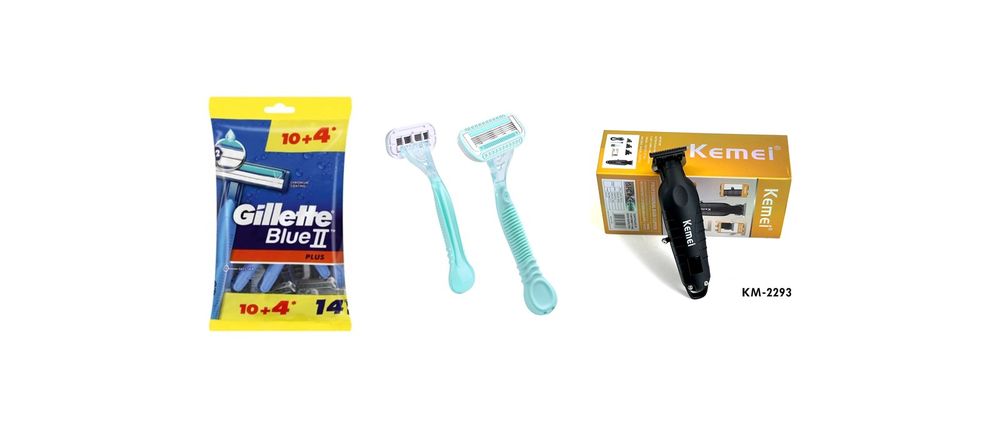
- Gillette Blue II Plus, 10 + 4 free: twin-blade disposables described as giving a smooth, comfortable shave.
- Men’s Shaving Razors 4+10: a practical pack for daily use.
- Good Max Fresh 4-Blade Razors from Good Max: four blades for a closer shave.
- Schick Shaver Refills, 3 pieces: for Schick handle users who want to change blades on time.
Electric shavers
The blade does not touch your skin directly the way a razor does, so nicks are less likely. The NHS suggests trying an electric razor instead of wet shaving to reduce ingrown hairs, and leaving about 1mm of stubble rather than shaving too close. One option is the Kemei Shaving Machine #2293 from Kemei, a brand known for shavers and trimmers; see more in shaving machines. Clean it regularly and replace foils and blades as the manufacturer recommends.
Shaving gel or shaving foam?
Either works; what matters is never shaving dry skin. Gels, foams and creams soften hair and help the blade glide, and the AAD advises applying shaving cream or gel after wetting the hair, choosing one labeled for sensitive skin if you need it.
- Gel: a thick texture that usually lathers as you rub it, for a cushioned feel.
- Foam: spreads fast, good for a quick daily shave.
- Cream: suits dry skin and brush users.
Keep the lather wet while you shave; if it dries, rinse and reapply. Find gels, foams and more in shaving and hair removal essentials.
How to shave without irritation: step by step
A shave without irritation depends on softening the hair, shaving with the grain and using a sharp blade. Follow these steps based on AAD dermatologists’ shaving tips:
- Wash your face: with a gentle, non-pore-clogging cleanser; our face wash guide by skin type can help you choose.
- Soften the hair: shave at the end of your shower or hold a warm, damp towel on your face for a few minutes.
- Apply gel or foam: an even layer over the whole area.
- Find your grain: check in the mirror; beard and neck hair can grow in different directions.
- Shave with the grain: short strokes, never more than twice over the same spot.
- Rinse the blade after each swipe: so hair and foam do not clog it.
- Do not stretch your skin or press hard: pressure raises the risk of nicks and irritation.
- Rinse and cool: wash off the foam with warm water, then hold a cool, damp cloth on the skin.
How do you prevent ingrown hairs and razor bumps?
Shave with the grain, use a sharp blade and avoid shaving too close. An ingrown hair is a hair that grows back into the skin after cutting, causing raised, often itchy bumps. Razor bumps (pseudofolliculitis barbae) are especially common, the AAD says, in men with coarse or curly hair.
What helps
- Use a sharp blade and replace disposable razors after 5 to 7 shaves, as advised in the AAD razor bump prevention tips.
- Try an electric or single-blade razor if bumps keep coming back.
- Use a gentle body scrub to release trapped hairs, as the NHS suggests.
- Do not pluck hairs from a bump or scratch or squeeze it; this can damage the skin and lead to infection.
- For body areas, consider another method, such as Veet Hair Removal Cream for Sensitive Skin 100ml from Veet, after a patch test and following the pack directions.
When to see a doctor
If the area becomes very painful, hot or swollen, or you have a high temperature, these are signs of infection that need a doctor, according to the NHS. If bumps continue despite a better technique, see a dermatologist; the AAD warns they can leave permanent scars if ignored.
What should you apply after shaving?
After shaving, rinse, cool the skin with a damp cloth, then apply a gentle moisturizer or aftershave that does not sting. The AAD recommends an aftershave made to reduce bumps and irritation, and switching if one burns.
- KORMESIC Natural Aloe Vera Gel 300g from KORMESIC: a light aloe gel you can use as a post-shave moisturizer.
- To find a moisturizer for your skin, see our moisturizer guide by skin type.
- If you shave your underarms, do not apply deodorant straight away; see our deodorant guide.
What is the difference between men’s and women’s razors?
The difference is in design, not function: women’s razors usually have a rounded head and a handle shaped for legs and body curves, often with moisture strips. If you are shopping for the household, options include:
- Gillette Venus Sensitive Disposable Razors, 3 pcs and Gillette Venus Sensitive, 6 pcs.
- Gillette Simply Venus 3-Blade, 8+4, with a moisture strip and teardrop handle.
- Gillette Venus ComfortGlide Breeze, with three blades and glide strips.
- Personna Lady Capri 3-Blade, 4 pack from Personna.
How should you care for your shaving tools?
Keep your tools dry and change blades on time. The AAD advises replacing disposable razors after 5 to 7 shaves, storing them away from a wet shower, and cleaning electric razors every 5 to 7 shaves. Do not share your razor.
Comparison of the best shaving tools available
| Product | Brand | Best for | Key feature |
|---|---|---|---|
| Gillette Blue II Plus 10+4 | Gillette | Daily shaving | Twin blade, large pack |
| Good Max Fresh 4 Blades | Good Max | Close shave | Four blades |
| Kemei Shaving Machine 2293 | Kemei | Machine users | From a shaver specialist |
| Schick Shaver Refills, 3 | Schick | Schick handle users | Replacement blades |
| KORMESIC Aloe Vera Gel 300g | KORMESIC | After shaving | Natural aloe gel |
| Gillette Venus Sensitive | Gillette | Women, sensitive skin | Disposable |
| Gillette Simply Venus 3 | Gillette | Women | Moisture strip |
| Personna Lady Capri | Personna | Women | Three blades |
Common shaving mistakes
- Shaving dry skin: more friction and nicks.
- Shaving against the grain: closer, but more irritation.
- Using a dull blade: more strokes and more bumps.
- Stretching skin and pressing hard: cuts hair below the surface and invites ingrown hairs.
- Leaving your razor in a damp shower: store it dry.
- Plucking hairs from bumps: makes them worse.
Frequently asked questions
Is shaving with a razor better than an electric shaver?
A razor gives a closer, smoother shave; an electric shaver is faster and gentler on skin prone to bumps and ingrown hairs. If your skin tolerates a razor, use it with shaving gel and shave with the grain; if irritation keeps coming back, try an electric shaver or a single-blade razor.
How often should I change my razor blade?
The American Academy of Dermatology advises changing your blade or throwing away disposable razors after 5 to 7 shaves. If the blade tugs or you need more strokes than usual, it is dull and should be changed sooner. Store your razor somewhere dry between uses.
Can I shave without shaving gel?
It is not recommended, because shaving dry skin increases friction, nicks and irritation. Wet the hair with warm water, then apply a shaving gel, foam or cream, choosing one for sensitive skin if you irritate easily. In a pinch, well-wetted hair is still better than dry.
How do I get rid of razor bumps?
Stop shaving too close, shave with the grain using a sharp blade, do not pluck or squeeze the bumps, and cool your skin with a damp cloth after shaving. Growing a beard, if that is an option, removes the cause. If bumps persist or become painful or swollen, see a dermatologist.
Is shaving against the grain better?
Shaving against the grain gives a closer result but increases irritation and the chance of ingrown hairs, which is why dermatologists advise shaving with the grain. For a smoother finish, reapply gel and do another pass with the grain, never going over the same spot more than twice.
What does “moos” mean in Saudi shaving terms?
In Saudi Arabia, “moos” (plural “amwas”) usually means the razor itself, such as the Gillette Blue II Plus, although some people use it for shaving mousse, the foam applied before shaving. A good shave needs both: a sharp blade and a foam or gel that softens the hair.
Where to buy original shaving products
Care Outlet’s shaving and hair removal essentials section has Gillette, Schick and more, and shaving machines covers electric options, online or at our branches across Saudi Arabia. All our products are original and come from the brands’ official agents inside and outside Saudi Arabia. Also browse personal care.