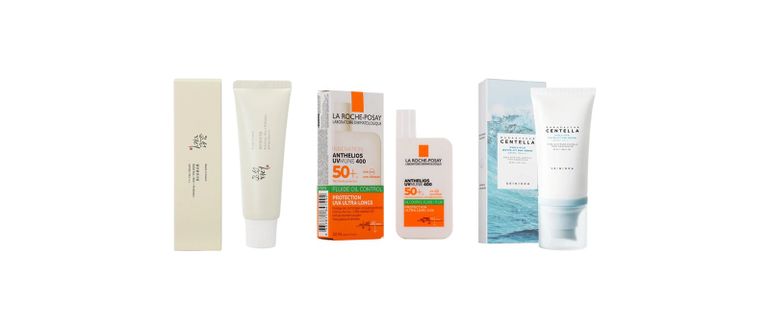

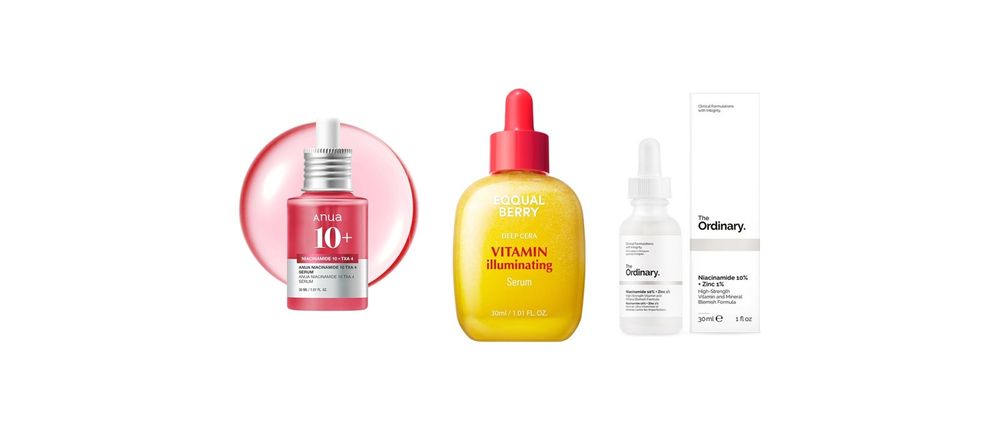
A face serum is a lightweight product with a high concentration of one or more active ingredients, chosen by your skin concern: hyaluronic acid for dryness, vitamin C and niacinamide for dullness and dark spots, and retinol for fine lines. It goes after cleanser and before moisturizer, and one serum per routine is usually enough. Below: what suits each concern, how to use it, and what to combine or avoid, with picks from The Ordinary, La Roche-Posay and Anua.
Quick answer
- Choose a serum for your main skin concern, not for the most hyped ingredient.
- Hyaluronic acid hydrates and suits all skin types, vitamin C and niacinamide improve the look of dullness and spots, and retinol reduces the look of fine lines.
- Apply serum after cleanser and before moisturizer, layering from thinnest to thickest.
- Vitamin C suits the morning under sunscreen; retinol is for the evening only.
- Introduce one new active at a time, and wear sunscreen daily with retinol and acids.
What is a serum, and how is it different from a moisturizer?
A serum is a light liquid or gel with a higher concentration of actives, while a moisturizer is thicker and mainly locks in hydration and protects the skin barrier. One does not replace the other: the serum targets a concern and the moisturizer seals the routine. Cleveland Clinic advises layering from lightest to heaviest, since a thick cream applied first can block a thinner serum, and using only one serum at a time.
A quick note on names: an "ampoule" is usually a more concentrated serum, and a "booster" boosts one specific ingredient. Both sit in the serum step.
Which serum suits your skin concern?
Start from the problem: dryness needs hydrators, spots need brighteners, shine needs oil-balancing ingredients, and lines need retinol or an alternative.
Dry, dull skin: hyaluronic acid
Hyaluronic acid is a sugar molecule that binds water to keep skin hydrated and plump, and it is generally not irritating, according to Cleveland Clinic. Options include The Ordinary Hyaluronic Acid 2% + B5 30ml, which hydrates and helps strengthen the barrier in a light formula for all skin types; La Roche-Posay Hyalu B5 Serum 30ml, which hydrates, improves elasticity and reduces the look of fine lines; and the Dalton Triple Hyaluronic Booster with three types of hyaluronic acid.
Dark spots and uneven tone
Look for vitamin C, niacinamide, or brighteners such as tranexamic acid (TXA), alpha arbutin and kojic acid:
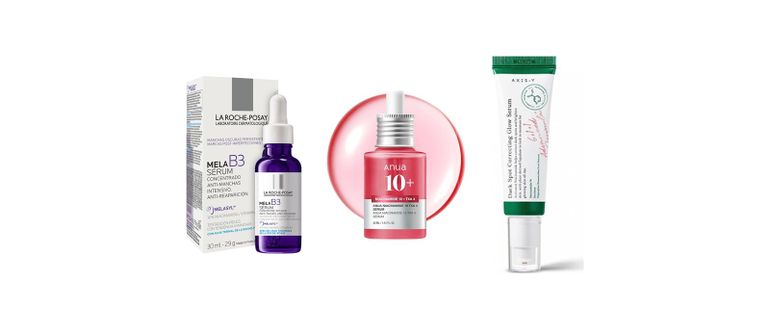
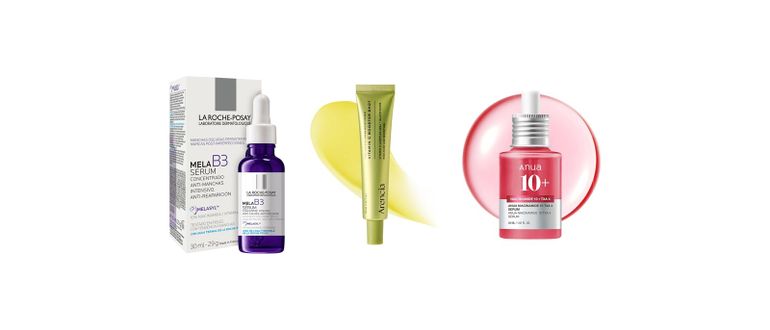
- Anua Dark Spot Correcting Serum with Niacinamide and TXA: evens tone and reduces the look of dark spots.
- Axis-Y Dark Spot Correcting Serum 50ml from Axis-Y: 5% niacinamide with plant-derived squalane to hold moisture.
- Beauty of Joseon Glow Deep Serum Rice + Arbutin: alpha arbutin to brighten dark areas and fade the look of acne marks.
- Medicube Kojic Acid Turmeric Niacinamide Serum: helps reduce the look of pigmentation and even tone.
- Eucerin Anti-Pigment Perfecting Serum 30ml from Eucerin.
Cleveland Clinic's guide to facial acids notes that kojic acid reduces hyperpigmentation but can cause allergic reactions in some people, so patch-test first. See more in face brightening.
Oily skin and visible pores
Niacinamide is the first pick, such as The Ordinary Niacinamide 10% + Zinc 1%, which helps reduce shine and blemishes. Another option is Bioderma Sébium Pore Refiner 30ml, which minimizes the look of enlarged pores, controls shine and preps skin for makeup. For breakout-prone skin, browse acne care.
Fine lines and loss of firmness
Retinol is the best-known ingredient here. If your skin cannot tolerate it, bakuchiol is a plant-based ingredient offered as a gentler alternative, as in the Equal Berry Bakuchiol Firming & Plumping Serum from Equal Berry. More options are in anti-wrinkle and anti-aging.
Sensitive skin and a weak barrier
Choose a hydrating serum with ceramides or vitamin B5, such as the Anua Rice Ceramide Barrier Serum 50ml, with 7 rice extracts and ceramides to strengthen and hydrate the barrier.
What does vitamin C serum do, and how do you use it?
Vitamin C serum is a powerful antioxidant that helps stimulate collagen and boosts radiance; apply it in the morning after cleansing. Cleveland Clinic's anti-aging skin care guide says vitamin C products should come in an opaque container, since light inactivates it, and that they stay effective for only about six months. Vitamin C reinforces sunscreen but does not replace it.
- Equal Berry Vitamin C Brightening Serum 30ml: a concentrated serum that evens tone and brightens.
- La Roche-Posay Pure Vitamin C12 Serum: brightens, boosts radiance and reduces the look of fine lines.
- Garnier Vitamin C Rapid Glow Serum 30ml from Garnier: instant glow and less visible dark spots.
- Advanced Clinicals Vitamin C Serum 52ml: with soothing aloe and ferulic acid.
What does niacinamide serum do?
Niacinamide is a form of vitamin B3. Cleveland Clinic's niacinamide article says it may strengthen the skin barrier, help regulate oil, and make pores look smaller, and that some research suggests 5% formulas may help lighten dark spots. It is generally gentle and can be used once or twice a day. Another option is the Q+A Niacinamide Serum 30ml.
How do you use retinol serum safely?
Use retinol in the evening only, a pea-sized amount, every other night for the first two weeks, then increase gradually if your skin tolerates it. Cleveland Clinic's retinol page explains that it is a form of vitamin A that boosts cell turnover and collagen, that dryness, redness and peeling are usually temporary, and that it makes skin more sun-sensitive. Results take several weeks, and wrinkles several months.
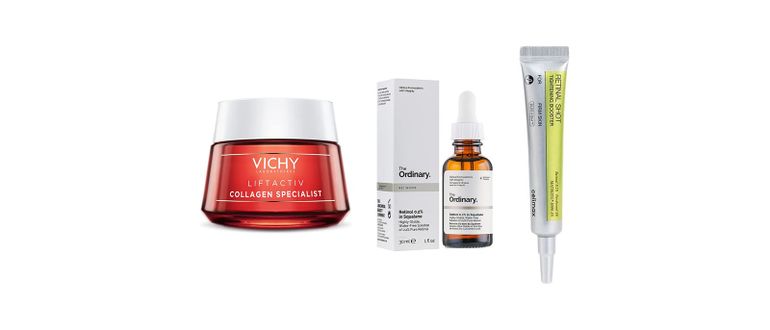
- La Roche-Posay Retinol B3 Serum: pure and gradual retinol with vitamin B3.
- The Ordinary Retinol 0.5% in Squalane: a water-free formula.
If you are pregnant or breastfeeding, ask your doctor before using any retinol product, and never apply it to irritated or broken skin.
Where does serum go in your routine, and what should you not combine?
Morning: cleanser, serum, moisturizer, sunscreen. Evening: cleanser, retinol or serum, moisturizer. Eye products go between serum and moisturizer, such as The Ordinary Caffeine Solution 5% + EGCG or picks from eye care.
- Do not combine at the same time: vitamin C with AHA exfoliants, which can disrupt skin pH, or retinol with acids on the same night, which increases irritation.
- Fine to combine: niacinamide with vitamin C, retinol or hyaluronic acid, according to Cleveland Clinic.
- Simplest plan: vitamin C in the morning, retinol at night.
Comparison of the best serums available
| Product | Brand | Best for | Key feature |
|---|---|---|---|
| Anua Dark Spot Serum | Anua | Spots, uneven tone | Niacinamide and tranexamic acid |
| Equal Berry Vitamin C | Equal Berry | Dullness | Concentrated vitamin C |
| The Ordinary Niacinamide + Zinc | The Ordinary | Oily skin | Reduces shine and blemishes |
| La Roche-Posay Hyalu B5 | La Roche-Posay | Dryness, fine lines | Hyaluronic acid and vitamin B5 |
| The Ordinary Hyaluronic Acid 2% + B5 | The Ordinary | All skin types | Light hydration |
| La Roche-Posay Vitamin C12 | La Roche-Posay | Dullness, lines | Radiance |
| La Roche-Posay Retinol B3 | La Roche-Posay | Wrinkles | Retinol with vitamin B3 |
| Axis-Y Dark Spot Serum | Axis-Y | Dark spots | 5% niacinamide with squalane |
| Anua Rice Ceramide Serum | Anua | Sensitive skin | Strengthens the barrier |
| Beauty of Joseon Glow Deep | Beauty of Joseon | Acne marks | Alpha arbutin and rice |
How to choose the right serum: a practical checklist
- Pick one concern: dryness, spots, shine or lines.
- Match the ingredient: hyaluronic acid, vitamin C, niacinamide or retinol.
- Start moderate: especially if your skin is sensitive.
- Patch-test: try it on a small area for a day or two first.
- Complete the routine: a suitable cleanser, a moisturizer from face moisturizing, then sunscreen; see our face wash guide and moisturizer guide.
- Buy from a trusted source: all Care Outlet products are original and come from the brands' official agents inside and outside Saudi Arabia.
Common mistakes
- Layering several serums: more products mean more chance of irritation.
- Skipping sunscreen: retinol and acids make skin more sun-sensitive; pick one with our sunscreen guide.
- Quitting too early: most actives need several weeks of regular use.
- Storing vitamin C in light and heat: it loses effectiveness faster.
- Ignoring ongoing irritation: if stinging, itching or redness persists, stop and see a doctor or pharmacist.
Frequently asked questions
What is the best face serum?
No single serum suits everyone; the best one targets your concern. For dryness, try a hyaluronic acid serum such as La Roche-Posay Hyalu B5; for spots, Anua Dark Spot Serum or Equal Berry Vitamin C; for shine, The Ordinary Niacinamide + Zinc; and for fine lines, La Roche-Posay Retinol B3.
Should I use vitamin C serum in the morning or at night?
Morning is best, after cleansing and before moisturizer and sunscreen, because as an antioxidant it reinforces your sunscreen without replacing it. Keep it in its opaque bottle away from light and heat, use it within its shelf life after opening, and stop if it causes ongoing irritation.
Can I use niacinamide and vitamin C together?
Yes. Cleveland Clinic says niacinamide pairs well with vitamin C, retinol and hyaluronic acid, as long as you avoid piling on too many products at once. If your skin is sensitive, use vitamin C in the morning and niacinamide at night, and watch how your skin responds in the first weeks.
Is L'Oréal serum for the face or for hair?
L'Oréal Paris makes both face and hair serums, so read the product name carefully. One hair example from L'Oréal Paris is the Elvive Dream Long Straight Serum 100ml, an anti-frizz serum for long hair that is light, silicone-free and heat-protecting. It is not meant for the face.
How many serums should I use?
One serum per routine is usually enough, as Cleveland Clinic advises, because more products raise the chance of irritation. You can use a morning serum such as vitamin C and an evening one such as retinol, as long as you introduce each new product alone and watch your skin for two weeks first.
Is retinol suitable for beginners?
Yes, if you start slowly: a pea-sized amount in the evening, every other night at first, followed by a non-comedogenic moisturizer and sunscreen every morning. Mild dryness and peeling are common early on; severe irritation is a reason to stop and see a doctor. Ask a doctor before using it during pregnancy.
Where to buy original face serums
The skin serum section at Care Outlet brings together The Ordinary, La Roche-Posay, Anua, Equal Berry and more, online or at our branches across Saudi Arabia. Also browse skin care and sunscreens.