
Cracked heels are usually the result of very dry skin on the thick pad of the heel combined with the repeated pressure of walking and standing: the skin hardens, loses its flexibility and then splits. In most cases the fix is simple and consistent: a daily foot cream with ingredients such as urea or glycerin, gentle exfoliation of the built-up skin, and the right shoes. This guide explains what causes cracked feet, how to choose a good heel cream, and when to see a doctor, with picks from our foot care section.
Quick answer
- Cracked heels are usually a sign of dry skin and a build-up of hard skin, and they tend to look better with regular moisturising and exfoliation.
- The best heel cream is a rich cream or balm rather than a light lotion, ideally with urea, glycerin, shea butter or petrolatum.
- Apply foot cream after a shower while the skin is still slightly damp, then again at bedtime under cotton or gel socks.
- Remove hard skin gently with a foot file or pumice stone once or twice a week, and never cut it off with a blade.
- If you have diabetes or poor circulation, or you notice deep bleeding cracks, redness or pain, see a doctor before trying any home care.
Why do heels crack?
Heels crack because the skin there is thick and has few oil glands, so once it dries out it loses its stretch and splits under the weight of the body. Mayo Clinic explains that dry skin happens when the outer layer loses water, that causes include low-humidity climates, long hot showers, harsh soaps and ageing, and that very dry skin can form deep cracks that may bleed.
Common triggers
- Dry air and air conditioning: low humidity in winter or in air-conditioned rooms draws water out of the skin.
- Going barefoot or wearing open-back shoes: with slippers and sandals the heel pad spreads without support, which increases the strain on it.
- Standing for long hours: extra pressure on the heel builds thick, hard skin that cracks easily.
- Skipping moisturiser: many people moisturise their face and hands and forget their feet completely.
How does hard skin lead to cracks?
A callus is a thick, rough patch of skin the body builds where there is pressure and friction. The NHS notes that calluses come from pressure or rubbing, such as uncomfortable or badly fitting shoes, and suggests softening them in warm water, using a pumice stone or foot file regularly, and moisturising to keep the skin soft. When the rim of the heel becomes hard and dry, it loses flexibility and fissures appear.
What is the best cream for cracked feet?
The best cream for cracked feet is a thick cream or balm that combines an ingredient that draws water into the skin with one that seals it in. For dry skin, the American Academy of Dermatology (AAD) recommends creams or ointments over lotions because they add more moisture, and lists helpful ingredients including glycerin, lactic acid, shea butter, petrolatum, lanolin and jojoba oil.
Urea: the classic heel cream ingredient
Urea is a humectant that pulls water into the outer layer of the skin, and at higher strengths it also helps soften thick, rough skin. That is why it appears in so many heel creams, usually with the percentage printed on the pack:
- 5% urea: good for daily moisturising of dry feet and mild roughness, such as Eveline Soft Foot Care Cream 5% Urea from Eveline.
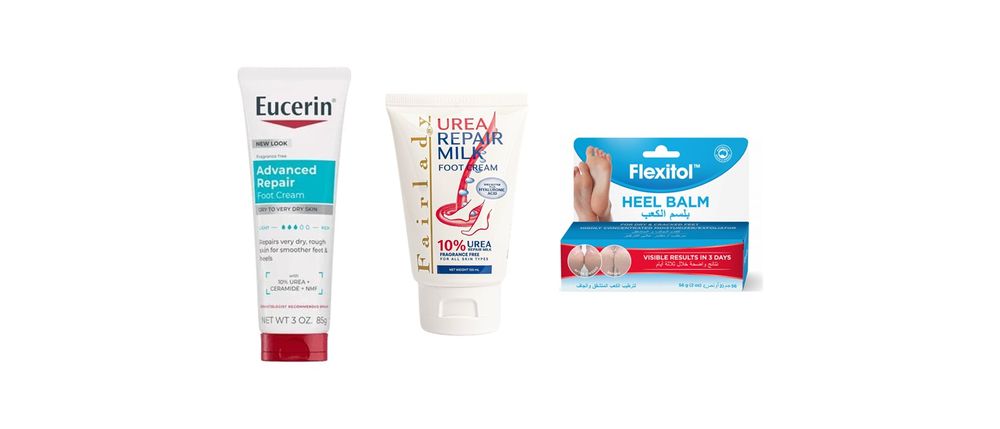
- 10% urea: suited to rough, cracked heels, such as Fair Lady Milk & Urea 10% Heel Repair Cream from Fair Lady and Covix Urea 10% Foot Cream from Covix Care.
- A rich heel balm: such as Flexitol Heel Balm with urea from Flexitol, for very dry heels.
Urea can sting a little on an open crack. If that happens, apply the cream around the crack until it closes, or switch to a gentler formula.
Glycerin, butters and oils
Glycerin is a humectant that attracts water, which makes it a good choice if you want a simple, multi-purpose cream such as Glysolid Cream 125 ml from Glysolid, used on hands, feet and body. Butters such as cocoa butter form a layer that holds moisture in, for example Palmer's Cocoa Butter Cream, made for dry areas like elbows, knees and heels.
Concentrated, fragrance-free foot creams
If your skin is sensitive, look for a fragrance-free formula such as Eucerin Moisturizing Foot Cream 85 g from Eucerin, designed for dry feet and rough skin. Other concentrated options are O'Keeffe's Deep Moisture Working Foot Cream and O'Keeffe's Deep Moisturizing & Intensive Renewal Foot Cream from O'Keeffe's, made for extremely dry, cracked feet.
How do you exfoliate heels safely?
Exfoliate your heels gently after soaking them in warm water for a few minutes, using a foot file or pumice stone, no more than once or twice a week. The aim is to remove the dead surface layer, not to reach red, sore skin, because aggressive filing makes the skin harden again quickly.
Step-by-step at home
- Soak your feet in warm, not hot, water for 5 to 10 minutes to soften the skin.
- Dry your feet well, especially between the toes.
- File the hard areas in one direction with light pressure, using a tool such as the double-sided metal foot file and scrubber from LMLTOP.
- Instead of a file, you can use a grainy scrub such as Palmer's Coconut Foot Scrub from Palmer's.
- Rinse, then apply foot cream straight away.
For more tools, browse our body scrub and bath accessories sections, and see our guide to body wash and body scrub.
What about foot peeling socks?
Peeling socks are a mask you wear on your feet for a set time, after which dead skin starts to shed over the following days. Examples include MBeauty Magic Foot Exfoliating Socks from MBeauty and Collagen Foot Peeling Socks from Butterfly Perfect. Follow the timing on the pack exactly, never use them on open cracks or inflamed skin, and if you have diabetes, ask your doctor first.
Do overnight socks and gel socks help?
Yes. Socks keep the cream on your skin for longer and off your bedding, so your heels benefit from it all night. The easiest method is to apply a generous layer of foot cream at bedtime, then put on clean cotton socks.
Gel socks have a moisturising gel layer on the inside, such as Spa System Moisturizing Gel Socks with jojoba oil, olive oil and vitamin E from Spa System, and can be worn alone or over a layer of cream. For a weekly treat, try the Dragon Fruit Foot Moisturizing Mask from MONDSUB.
Comparison table: top picks for cracked heels
| Product | Brand | Best for | Key feature |
|---|---|---|---|
| Milk & Urea 10% Heel Repair Cream | Fair Lady | Dry, cracked heels | 10% urea with milk, 100 ml |
| Heel Balm 56 g | Flexitol | Very dry heels | Rich balm with urea |
| Moisturizing Foot Cream 85 g | Eucerin | Dry, sensitive skin | Fragrance- and colourant-free, per its description |
| Deep Moisture Working Foot Cream 76 g | O'Keeffe's | Extremely dry feet | Concentrated foot cream |
| Urea 10% Foot Cream 75 ml | Covix Care | Rough heels | 10% urea to moisturise and soften |
| Soft Foot Care Cream 5% Urea | Eveline | Daily care and mild roughness | 5% urea, 100 ml |
| Glysolid Cream 125 ml | Glysolid | Hands, feet and body | Multi-purpose glycerin cream |
| Moisturizing Gel Socks | Spa System | Overnight moisturising | Gel with jojoba and olive oils and vitamin E |
| Double-Sided Foot File and Scrubber | LMLTOP | Removing hard skin | Metal file with plastic handle |
| Magic Foot Exfoliating Socks | MBeauty | Occasional dead-skin peel | Lavender, green tea and rose scents |
How to choose the right heel cream
Choose a heel cream based on how dry your skin is, how sensitive it is, and how you plan to use it. A practical checklist:
- Gauge the problem: mild roughness is fine with 5% urea or a glycerin cream; rough, cracked heels do better with 10% urea or a rich balm.
- Go thick: creams and balms do more for heels than light lotions.
- Check the fragrance: if your skin is sensitive, pick a fragrance-free product.
- Plan your routine: a fast-absorbing cream for daytime and a richer one under socks at night.
- Add an exfoliating tool: a file or pumice stone lets the cream reach smoother skin.
- Buy from a trusted seller: all foot care products at Care Outlet are original and come from the brands' official agents.
Common mistakes
- Cutting hard skin with a blade or scissors: this can wound the skin and lead to infection, and the NHS advises against cutting calluses yourself.
- Scrubbing hard every day: it irritates the skin and encourages new hard skin to form.
- Long soaks in hot water: hot water and long showers make dryness worse.
- Putting cream between your toes: extra moisture there can encourage fungal infections, so apply it to the heel, sole and top of the foot only.
- Stopping once things improve: cracks come back quickly without moisturising, so make it a daily habit.
- Ignoring your shoes: tight shoes and open-back footwear increase pressure on the heel.
When should you see a doctor, especially with diabetes?
See a doctor if the cracks are deep or bleeding, if you notice redness, swelling, pus or increasing pain, or if your feet do not improve despite regular home care. Mayo Clinic notes that deep cracks can let bacteria in and lead to infection.
People with diabetes need to be more careful. The Centers for Disease Control and Prevention (CDC) explains that diabetic nerve damage can reduce feeling in the feet, so a small cut or blister may go unnoticed and turn into an ulcer. It advises checking your feet every day, washing them in warm (not hot) water without soaking, drying them completely, applying lotion to the top and bottom but not between the toes, and not removing corns or calluses yourself or with over-the-counter products. If you have diabetes, ask your doctor before using a foot file or peeling socks.
Frequently asked questions
What causes cracked heels?
The most common cause is dry, thick skin on the heel combined with repeated pressure from walking and standing. Dry air, going barefoot, open-back shoes, long hot showers and skipping moisturiser all make it worse. Sometimes cracked heels are linked to a health condition, so if they persist despite good care, speak to a doctor.
What is the best heel cream for cracks?
A rich cream or balm with urea is usually the best fit, for example Fair Lady's 10% urea cream or Flexitol Heel Balm, or a glycerin cream such as Glysolid. If your skin is sensitive, choose a fragrance-free option such as Eucerin's foot cream. More important than the brand is using it consistently every day.
How often should I apply foot cream?
At least once a day, and ideally twice: after a shower or wudu while the skin is still slightly damp, and again at bedtime under cotton socks. Once your heels look better, keep going once a day to maintain the result, because cracks return quickly when you stop moisturising.
Is urea safe on cracked feet?
Urea is a common foot cream ingredient used at different strengths, but it can sting slightly on an open crack. Start with a strength that suits your skin, apply it around deep cracks until they close, and stop if you notice clear irritation. People with diabetes should check with their doctor first.
Do foot peeling socks help cracked heels?
Peeling socks help shed built-up dead skin, but they do not replace daily moisturising. Do not use them on open cracks or inflamed skin, follow the time on the pack, and do not repeat them sooner than recommended. People with diabetes should only use them after speaking to their doctor.
How do I stop cracked heels coming back?
Make moisturising a daily habit, exfoliate gently once or twice a week, wear comfortable shoes that support the heel, and avoid walking barefoot on hard floors. Wear cotton socks over your foot cream at night.
The bottom line
Cracked heels are common and usually look much better with a few consistent steps: a rich moisturiser, gentle exfoliation, supportive shoes, and a doctor's visit for deep cracks or diabetes. Browse the foot care and body moisturising sections at Care Outlet, and read our guides to dry skin in winter and the best moisturiser for your skin type.