
The best moisturizer is the one that suits your skin type: a rich cream with ceramides or urea for dry skin, a light non-comedogenic gel or lotion for oily skin, and a fragrance-free formula for sensitive skin. Apply it after cleansing or showering while skin is still slightly damp, morning and evening. Below: moisturizer types and ingredients, face versus body, and picks from Cetaphil, CeraVe, QV and Bioderma.
Quick answer
- Every skin type needs a moisturizer, including oily skin; what changes is the texture and ingredients.
- Creams and balms hydrate more than lotions, so they suit dry skin and the body, while gels and light lotions suit oily faces.
- The best moisturizers combine humectants such as glycerin and hyaluronic acid, emollients such as shea butter, and occlusives such as petrolatum.
- Apply moisturizer to damp skin within minutes of showering to lock water in.
- For sensitive skin, look for "fragrance-free," not just "unscented."
Why do you need a moisturizer, even with oily skin?
Moisturizer keeps water in your skin and supports its protective barrier, which every skin type needs. The American Academy of Dermatology (AAD) oily skin tips stress that oily skin still needs moisturizer after cleansing, as long as it is labeled "oil-free" and "noncomedogenic." In the hot, dry Saudi climate, with air conditioning running for hours, skin loses moisture fast, so moisturizing becomes a daily essential.
What is the difference between lotion, cream, gel and balm?
The difference is the ratio of water to oil: more oil means better moisture-locking and a thicker feel. Cleveland Clinic notes that lotions contain more water and alcohol than creams, so they can be less hydrating for dry skin.
- Gel: watery, light and fast-absorbing, for oily and combination skin and hot weather, such as the Neutrogena Hydro Boost Water Gel for Combination Skin from Neutrogena.
- Lotion: lighter than cream and easy to spread over large areas, good for the body on hot days.
- Cream: richer than lotion, for normal to dry skin.
- Balm or ointment: the thickest, for very dry spots such as hands, heels and lips, like the La Roche-Posay Cicaplast Baume B5+ from La Roche-Posay, a soothing, moisturizing balm for sensitive or irritated skin, suitable for adults and children.
- Body oil: adds softness and glow; best applied to damp skin.
Which ingredients should you look for in a moisturizer?
Look for a mix of three categories, which Cleveland Clinic says gives the best results.
Humectants
They draw water to the skin's surface: glycerin, hyaluronic acid, lactic acid and urea. Urea helps very rough skin, as in the Eucerin UreaRepair PLUS 10% Urea Lotion from Eucerin, which intensely hydrates very dry skin and helps reduce roughness and flaking.
Occlusives
They form a layer that stops water from evaporating, such as petrolatum, dimethicone and lanolin. They do not add water; they keep what is already there.
Emollients
They fill tiny cracks in dry skin to smooth it, such as shea butter and mineral or plant oils.
Ceramides
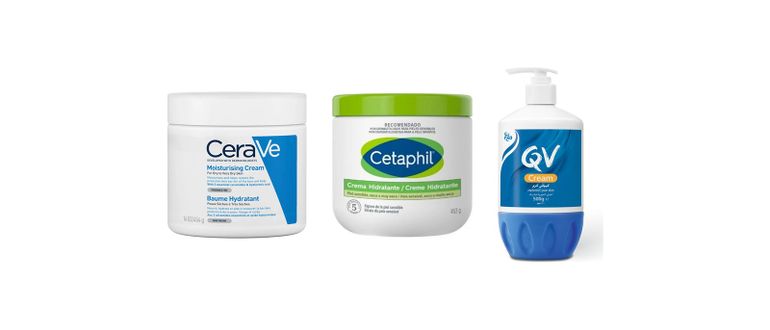
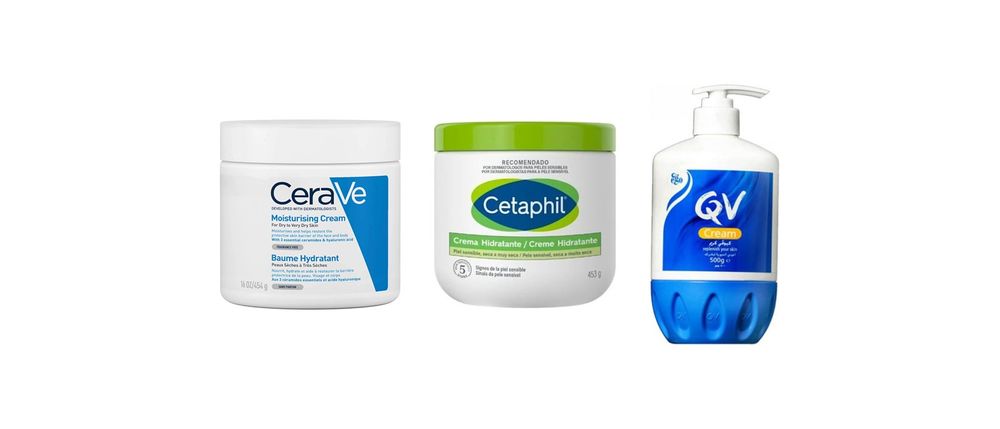
Natural lipids that make up a large part of the skin's outer layer; added ceramides help support the barrier. Examples include the CeraVe Moisturizing Cream for Dry Skin 454ml, a non-greasy cream with essential ceramides and hyaluronic acid, and the Mixa Ceramide Protect Body Lotion 250ml from Mixa for daily hydration and barrier support.
What is the best moisturizer for your skin type?
Dry skin needs a rich cream, oily skin an oil-free gel or lotion, sensitive skin a simple fragrance-free formula, and normal skin a balanced moisturizer.
Dry and very dry skin
- Cetaphil Moisturizing Cream 453g: long-lasting hydration for dry, sensitive skin, in a large tub for face and body.
- QV Moisturising Cream 500g: a rich cream that hydrates dry, sensitive skin and keeps it soft all day.
- Bioderma Atoderm Cream 500ml: made for dry and sensitive skin.
- Glysolid Skin Moisturizing Cream 400ml from Glysolid: hydrates dry skin and leaves it soft.
Oily and combination skin
- Bioderma Sébium Hydra Moisturizing Cream 40ml: a face moisturizer for oily and combination skin.
- La Roche-Posay Effaclar Mat 40ml: a shine-control cream for oily skin.
- Neutrogena Hydro Boost Water Gel: a fast-absorbing gel for combination skin.
If you are breakout-prone, avoid heavy oils and petrolatum on your face, and browse acne care.
Sensitive skin
- Neutrogena Hydro Boost Gel Cream with Hyaluronic Acid: a face moisturizer for sensitive skin.
- Rilastil Zerolact Moisturizing Soothing Cream 400ml: moisturizes, soothes irritation and restores comfort.
- Mixa Panthenol Comfort Body Lotion: hydration and comfort for dry, sensitive skin.
The AAD's dry skin tips warn that "unscented" products may contain masking chemicals that irritate skin, so look for "fragrance-free." If dryness or itching persists despite good care, see a doctor, as a skin condition may need diagnosis.
Normal skin
A balanced moisturizer works well, such as the Embryolisse Nourishing Moisturizer 75ml from Embryolisse, a multi-use cream for all skin types.
Is face moisturizer different from body moisturizer?
Yes. Facial skin is thinner and its pores clog more easily, so it needs a lighter non-comedogenic formula, while the body can handle richer creams. Cleveland Clinic recommends a cream for the body and a lotion or gel for the face unless it is very dry.
- Body: the Eucerin Hydrating Lotion for Rough Skin 500ml, or an oil such as Palmer's Cocoa Butter Formula Cocoa & Shea Body Oil with sesame, soybean and sunflower oils plus vitamin E. See more in body moisturizing and body oils.
- Hands: the Eucerin UreaRepair Hand Cream 5% Urea, rich in urea and lactate for very dry hands, and more in hand care.
- Face by day: moisturizer does not replace sunscreen; apply it before sunscreen and choose one with our best sunscreen guide.
When and how should you apply moisturizer?
Apply it right after cleansing or showering, while skin is still slightly damp, so it seals in that water. Cleveland Clinic advises patting the body dry until you are not dripping, then applying moisturizer within three minutes.
- Shower in lukewarm water for 5–10 minutes; hot, long showers dry skin.
- Pat dry without rubbing.
- Morning: cleanser, serum if you use one, moisturizer, then sunscreen.
- Evening: cleanser, serum, then a slightly richer moisturizer if needed; see our face serum guide.
- Reapply hand cream after every hand wash.
Comparison of the best moisturizers available
| Product | Brand | Best for | Key feature |
|---|---|---|---|
| Cetaphil Moisturizing Cream 453g | Cetaphil | Dry, sensitive skin | Intense hydration, large tub |
| QV Moisturising Cream 500g | QV | Dry, sensitive skin | Rich, all-day softness |
| Bioderma Atoderm Cream | Bioderma | Dry, sensitive skin | 500ml for face and body |
| CeraVe Moisturizing Cream | CeraVe | Dry skin | Ceramides and hyaluronic acid |
| Bioderma Sébium Hydra | Bioderma | Oily, combination skin | Face moisturizer |
| Glysolid Moisturizing Cream | Glysolid | Dry skin | 400ml family size |
| Eucerin UreaRepair PLUS 10% | Eucerin | Rough, flaky skin | 10% urea |
| Neutrogena Hydro Boost Water Gel | Neutrogena | Combination skin | Fast-absorbing water gel |
| La Roche-Posay Effaclar Mat | La Roche-Posay | Oily skin | Shine control |
| La Roche-Posay Cicaplast Baume B5+ | La Roche-Posay | Dry, irritated areas | Soothing family balm |
How to choose the right moisturizer: a practical checklist
- Know your skin type: an hour after washing, does your face feel tight or look shiny?
- Pick the texture: gel or lotion for oily skin, cream for dry skin, balm for very dry areas.
- Read the ingredients: look for ceramides, glycerin, hyaluronic acid or urea.
- For the face: check for "noncomedogenic."
- For sensitive skin: choose "fragrance-free" and patch-test first.
- Buy from a trusted source: all Care Outlet products are original and come from the brands' official agents inside and outside Saudi Arabia.
Common mistakes
- Skipping moisturizer on oily skin: the fix is a lighter formula, not none at all.
- Applying to bone-dry skin: it locks in less moisture.
- Using a heavy body cream on acne-prone facial skin: it may clog pores.
- Long, hot showers: they strip natural oils; pair them with a gentle cleanser from our face wash guide.
- Forgetting your lips: use a balm from lip care.
Frequently asked questions
What is the best moisturizer for dry skin?
Choose a rich cream that combines humectants and occlusives, such as CeraVe Moisturizing Cream with ceramides and hyaluronic acid, Cetaphil Moisturizing Cream or QV Moisturising Cream. For very rough skin, try Eucerin's 10% urea lotion. Apply after showering on damp skin and repeat whenever skin feels dry.
Is CeraVe cream good for the face?
CeraVe Moisturizing Cream suits both face and body if your skin is dry or sensitive, since it is non-greasy and contains ceramides and hyaluronic acid. If your skin is oily or acne-prone, it may feel heavy on the face; a light gel such as Neutrogena Hydro Boost or Bioderma Sébium Hydra will suit you better.
What is the difference between QV cream and Cetaphil cream?
Both are rich moisturizing creams for dry, sensitive skin, available in large tubs for face, body and family use. QV also offers the QV Intensive Moisturising Cream 100g, and Cetaphil the Cetaphil Cream for Dry to Very Dry Skin 100g with 48-hour relief according to its description. Try both and keep the feel you prefer.
Is Glysolid cream good for the face?
Glysolid is a moisturizing cream for dry skin that can be used on hands, body and rough areas. If your facial skin is dry, it may suit you; if it is oily or acne-prone, a light face moisturizer labeled noncomedogenic is a better choice. Test it on a small area of your face first.
Should I moisturize in the morning or at night?
Both: in the morning after cleansing and before sunscreen, and at night after cleansing and serum. On the body, apply right after showering onto damp skin. Your evening moisturizer can be a little richer if your skin is dry, while your morning one should sit comfortably under sunscreen.
What is the best moisturizer for oily skin?
The best moisturizer for oily skin is a light gel or lotion labeled "oil-free" and "noncomedogenic." Options include Bioderma Sébium Hydra for oily and combination skin, La Roche-Posay Effaclar Mat for shine control and Neutrogena Hydro Boost Water Gel. Do not skip it: oily skin needs hydration too.
Where to buy original moisturizers
The face moisturizing and body moisturizing sections at Care Outlet bring together Cetaphil, CeraVe, QV, Bioderma, Eucerin and more, online or at our branches across Saudi Arabia. Also browse skin care.