
The core baby essentials for the first year are fewer than most new parents expect: diapers in the right size for your baby's weight, gentle wipes or warm water for cleaning, a baby wash and shampoo, a light moisturizer after bath time, a barrier cream for the diaper area, and a small toothbrush and toothpaste once the first tooth appears. This guide covers each type, how to choose for your baby's age and skin, and common mistakes, with picks from Johnson's, Sebamed, WaterWipes and Bepanthen.
Quick answer
- Baby skin is thin and loses moisture quickly, so choose products made for babies with short ingredient lists, ideally fragrance-free for sensitive skin.
- Babies do not need a daily bath; three baths a week in the first year may be enough, and bathing more often can dry the skin.
- Frequent diaper changes, gentle cleaning and a thick layer of barrier cream with zinc oxide or petrolatum are the basis of diaper rash prevention.
- Choose diaper size by the weight range on the pack, not by age, and move up a size when you see tight marks or repeated leaks.
- Start brushing when the first tooth appears, twice a day, with a tiny smear of children's fluoride toothpaste.
- If a rash does not improve within a few days, or you see open sores or a fever, see your pediatrician.
What are the essential baby products?
Baby essentials are the everyday products for hygiene, comfort and skin protection, and they fall into six groups.
- Diapers: taped diapers and pull-up pants for active toddlers, found in Baby Diapers.
- Wipes: for the diaper area, hands and face on the go, found in Baby Wipes.
- Bath products: a gentle body wash and a tear-free shampoo, found in Baby Shampoo & Conditioner.
- Moisturizing and protection: lotion, cream, oil and diaper barrier cream, found in Baby Skincare.
- Oral care: a small soft toothbrush and children's toothpaste.
- Getting around: such as baby strollers, usually a one-time purchase.
How do you choose the right diapers?
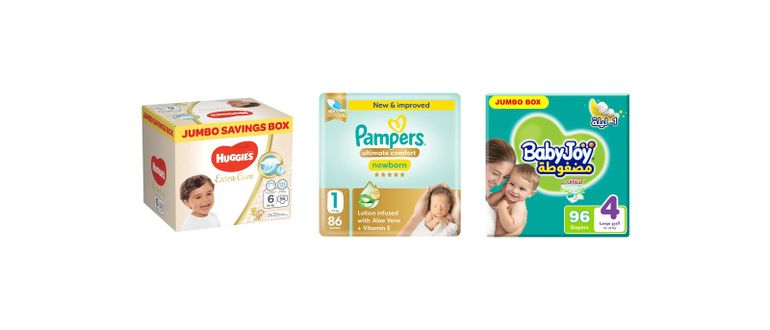
Choose diapers by your baby's weight first, then by absorbency and style. Every pack lists its weight range, for example BabyJoy Compressed Diapers Size 3 for 6–12 kg from BabyJoy. Since ranges overlap, size up when you see red marks from the waistband or repeated leaks.
The American Academy of Pediatrics advises on HealthyChildren.org to choose a highly absorbent diaper, because the better a diaper absorbs, the drier it keeps the skin. Options in store include:
- Pampers Anti-Rash Diapers Size 2 from Pampers, described as offering anti-rash protection, for the early months.
- BabyJoy Size 4 Jumbo Box of 96 and BabyJoy Size 5 Jumbo Box of 80 for older babies; big boxes make sense once your baby's size is stable.
- BabyJoy Compressed Diapers Size 6 and Pampers Complete Comfort Size 6 with Aloe and Vitamin E for heavier toddlers.
- BabyJoy Pants Size 7 for very active toddlers or those starting potty training, since pants pull on and off like underwear.
For full size charts and when to move up, read our baby diaper size guide.
What are the best baby wipes?
The best baby wipes are free of alcohol and fragrance, which is what HealthyChildren.org recommends for cleaning the diaper area. Fragrance and alcohol can add to irritation, especially on skin that is already red.
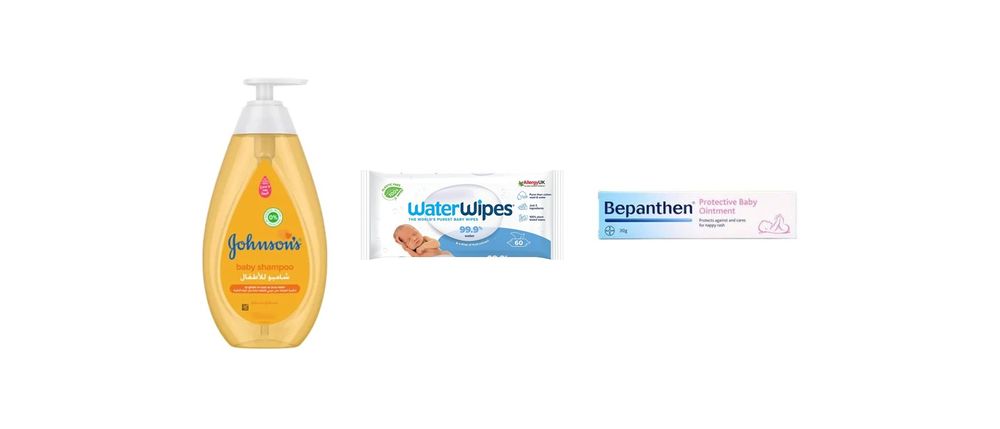
Good options include WaterWipes Baby Wipes 60 count and WaterWipes Sensitive Skin Baby Wipes, 4 packs of 60, described as 99.9% water with no fragrance, a value pack for home use. There are also Johnson's Baby Wipes 2+1.
If the skin is very irritated or broken, the same source suggests rinsing with water and a gentle cleanser instead of wiping, then patting dry.
How do you bathe a baby, and which wash and shampoo should you use?
Most babies only need about three baths a week in warm water with a small amount of gentle cleanser, according to the American Academy of Pediatrics (AAP), because bathing more often can dry the skin. Until the umbilical cord stump falls off, usually within one to two weeks, stick to sponge baths without putting the baby in water.
Bath safety rules
- Never leave your baby alone in the water, even for a second, and do not rely on bath seats: they can tip over, and the NHS advises against using them.
- Test the water with your wrist or elbow; it should feel warm, not hot, and be mixed well so there are no hot patches.
Choosing a body wash
The AAP recommends using soap sparingly and choosing a mild, neutral-pH cleanser without additives, rinsed off straight away. Options include Sebamed Baby Gentle Wash 200ml, made to cleanse delicate skin gently, and Johnson's Baby Bath 200ml, described as a No More Tears formula free of dyes, parabens, sulfates and alcohol.
Choosing a shampoo
Washing a baby's hair two or three times a week with a mild shampoo is enough. The best-known option is Johnson's Baby Shampoo 750ml, gentle on the eyes, also in 500ml. Alternatives include Mustela Gentle Shampoo 200ml from Mustela with avocado and chamomile, suitable from birth, and Sebamed Baby Shampoo with Chamomile 150ml. For older kids with long hair, try Johnson's Shiny Drops Kids Shampoo with the leave-in Shiny Drops Conditioner Spray to help detangle.
Does a baby need lotion, cream or oil?
Yes: a small amount of fragrance-free moisturizer applied right after the bath helps prevent dry skin, according to the AAP. The three formats differ in texture and richness:
- Lotion: light and quick to absorb, good for the whole body every day, such as Johnson's Baby Lotion 500ml or Sebamed Baby Lotion 100ml, described as being for sensitive skin.
- Cream: thicker than lotion, good for dry patches and cheeks, such as Sebamed Baby Extra Soft Cream 50ml with a pH of 5.5.
- Oil: seals moisture in and is often used for massage after bath time, such as Johnson's Baby Oil 500ml, the 200ml size, or Mustela Baby Oil 100ml. There is also Johnson's Baby Oil Gel with a floral scent, but since it is fragranced, skip it if your baby's skin is sensitive.
How do you protect the diaper area from rash?
The best protection against diaper rash is limiting how long urine and stool stay on the skin, then sealing the skin with a barrier layer. The AAP's guide to diaper rash notes that irritant rash is the most common type and that prevention comes down to these steps:
- Change the diaper as soon as it is wet or soiled, because prolonged moisture and the contents of the diaper irritate skin.
- Clean gently with alcohol-free, fragrance-free wipes or water, then pat dry.
- Apply a thick layer of barrier cream; ingredients matter more than the brand, zinc oxide and petrolatum are both good choices, and fragrance-free is best.
- If the cream is still clean at the next change, do not rub it off; simply add more on top.
- Give the area some diaper-free air time when you can.
Options in store include Bepanthen Baby Diaper Rash Ointment 30g and its larger Bepanthen 100g ointment, whose description mentions provitamin B5. Alternatives are Sudocrem Diaper Cream 250g from Sudocrem and Vaseline Petroleum Jelly Aloe Fresh 450ml from Vaseline; check the label if you prefer a fragrance-free product.
If you use powder, such as Johnson's Baby Powder 100g, shake it into your hand first, away from the baby's face, then spread it on the skin, and never use it on irritated skin or on top of barrier cream. If the rash does not improve in two to three days, or you see blisters, open sores or a fever, see your pediatrician.
When should you start caring for your baby's teeth?
Start as soon as the first baby tooth comes through, usually around six months. The NHS guide to children's teeth recommends brushing twice a day for about two minutes, once just before bed, with fluoride toothpaste, and says parents should do the brushing.
- Up to age 3: a smear of children's toothpaste with at least 1,000ppm fluoride.
- Ages 3 to 6: a pea-sized amount; spit out after brushing and do not rinse with water.
- Use a small, soft toothbrush suited to your child's age, and do not let children eat or lick toothpaste from the tube.
One option is Astera Kids Apple Toothpaste 50ml from Astera, whose description says it contains fluoride; check the age range and fluoride level printed on the pack. For more, read our oral and dental care buying guide.
Baby essentials compared
| Product | Brand | Best for | Key feature |
|---|---|---|---|
| Johnson's Baby Shampoo 750ml | Johnson's | Washing baby and kids' hair | Gentle on the eyes, family size |
| WaterWipes Baby Wipes 60 | WaterWipes | Diaper changes and sensitive skin | Baby wipes in a 60-count pack |
| Bepanthen Diaper Ointment 30g | Bepanthen | Protecting the diaper area | Soothes redness and protects skin |
| Sebamed Baby Gentle Wash 200ml | Sebamed | Regular bath time | Gentle cleansing that keeps skin soft |
| Johnson's Baby Oil 500ml | Johnson's | Massage and moisture after bath | Helps lock in moisture |
| Sebamed Baby Extra Soft Cream 50ml | Sebamed | Dry patches and cheeks | pH 5.5 |
| BabyJoy Size 5 Jumbo 80 | BabyJoy | Babies with a settled size | High absorption in a value box |
| Pampers Anti-Rash Size 2 | Pampers | The early months | Described as anti-rash protection |
| Mustela Gentle Shampoo 200ml | Mustela | A newborn's scalp | Avocado and chamomile, suitable from birth |
| Astera Kids Apple Toothpaste | Astera | First brushing routine | Contains fluoride per its description |
How to choose baby essentials: a practical checklist
- Start with the basics, then add items as needs appear.
- Pick products made for babies, ideally fragrance-free for sensitive skin.
- Read the weight range on diaper packs; buy a small pack when trying a new brand.
- Patch-test any new product on a small area for a day or two.
- Check the expiry date and seal, and buy from a trusted seller.
- Change one product at a time so you can spot the cause of any irritation.
All Care Outlet products are original and come from the brands' official agents and distributors inside and outside Saudi Arabia. Learn more in our article on where Care Outlet products come from.
Common mistakes
- Daily baths with cleanser: this can dry baby skin; plain warm water is enough on many days.
- Choosing diapers by age: weight is what counts, and a tight size causes chafing and leaks.
- Wiping off barrier cream at every change: if it is clean, add a fresh layer on top.
- Too much toothpaste: a thin smear is enough under age 3.
Frequently asked questions
What are the essential newborn baby products?
The basics are newborn-size diapers, fragrance-free wipes or cotton wool and warm water, a gentle baby wash and shampoo, a light fragrance-free moisturizer, a diaper barrier cream with zinc oxide or petrolatum, and a soft towel. You do not need much more in the first weeks, and you can add other items later as needs appear.
How often should I bathe my newborn?
The AAP says three baths a week may be enough in the first year, since babies rarely get very dirty and frequent bathing can dry their skin. On other days, simply clean the face, neck, hands and diaper area with warm water, a method the NHS calls topping and tailing.
What is the best diaper rash cream?
According to the AAP, ingredients matter more than the brand: look for zinc oxide or petrolatum, ideally fragrance-free, and apply a thick layer at every change. If the rash does not improve within a few days, or there are blisters or a fever, it needs a doctor's assessment.
Is baby oil better than baby lotion?
Neither is better in every case. Lotion is light and suits daily use, while oil seals in moisture and suits massage and drier skin. What matters most is a product made for babies, ideally fragrance-free, applied in a small amount right after the bath.
When should my baby start using toothpaste?
The NHS advises brushing from the first tooth, twice a day, with fluoride toothpaste of at least 1,000ppm, using only a smear until age 3. Parents should do the brushing and keep children from eating toothpaste. It also suggests a first dental visit before the first birthday.
Shop original baby essentials
You will find everything above in the Baby Essentials section at Care Outlet, online or at our branches in Saudi Arabia, including diapers, baby skincare and baby wipes, plus the wider Mom & Baby Care section.