
Choose baby diaper sizes by your baby’s weight, not age, and read the weight range printed on the pack, because diaper size charts differ from brand to brand. It is time to move up a size when your baby nears the top of the current range, leaks keep happening, or the elastic leaves red marks on the skin. Below: sizes, fit, overnight diapers, pants and rash prevention, with picks from Huggies, Pampers and Baby Joy.
Quick answer
- Choose the size by the weight range on the pack, not by age, because size charts differ between brands.
- Red marks from the elastic at the waist or thighs and frequent leaks are signs the diaper is too small.
- Changing diapers every three to four hours, or as soon as they are soiled, helps prevent most diaper rashes.
- Choose baby wipes free of alcohol and fragrance, and let the skin dry before putting on a fresh diaper.
- See your pediatrician if a rash does not improve in two to three days, or if blisters, crusts or fever appear.
How do you choose the right diaper size?
Go by current weight and the range on the pack, not age. Size numbers also differ between brands: the Huggies Premium Care Size 3 pack lists 4 to 9kg, while the Baby Joy Compressed Size 3 pack lists 6 to 12kg.
Approximate size guide
These ranges come from the weights printed on Huggies packs we stock and are a guide only; always check the pack you buy:
- Size 1 (newborn): up to about 5kg, such as Huggies Newborn Size 1, 128 diapers.
- Size 3: about 4 to 9kg at Huggies.
- Size 4: about 8 to 14kg, such as Huggies Premium Care Size 4, 90 diapers.
- Size 5: about 12 to 22kg, such as Huggies Premium Care Size 5, 76 diapers.
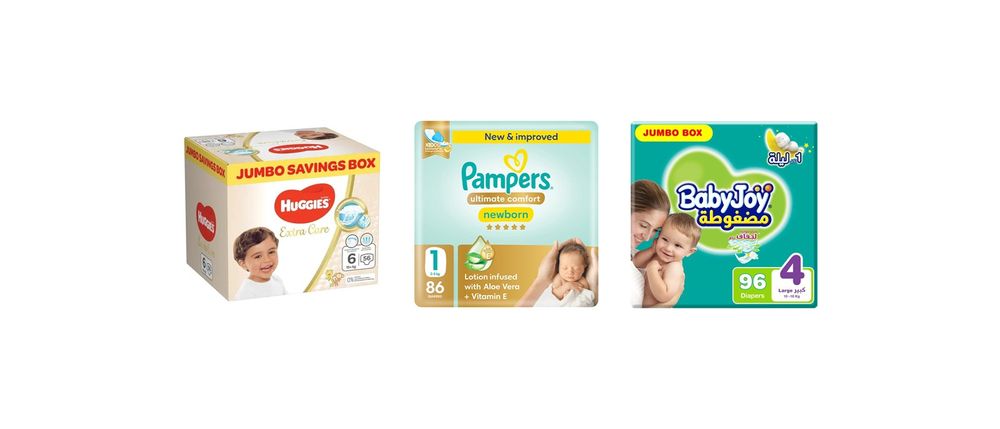
- Size 6: over 15kg, such as Huggies Extra Care Size 6, 56 diapers.
Ranges overlap; in the overlap, the larger size usually fits better, especially with leaks.
When should you move up to the next size?
Move up when your baby nears the top of the range or the diaper looks tight. The American Academy of Pediatrics explains on HealthyChildren.org that tight diapers trap moisture and can cause rash, and that red elastic marks are a reason to size up.
Signs the diaper is too small
- Red elastic marks around the waist or thighs.
- Frequent leaks, especially up the back.
- Tabs that barely reach the middle of the waistband.
Signs the diaper is too big
- Gaps around the thighs or hips that let urine escape.
- Tabs that overlap a lot at the front.
When fastening, the HealthyChildren page on changing diapers advises securing the tabs evenly at the front so there are no gaps around the hips.
Which diapers suit newborns?
Newborns need size 1 or a newborn size in a soft diaper. HealthyChildren notes you may use as many as 8 to 12 diapers a day, but avoid overstocking the first size, as babies outgrow it quickly. Options:
- Pampers Premium Care Size 1, 86 diapers: described as soft on sensitive newborn skin with high absorbency.
- Huggies Premium Care Newborn Size 1, 64 diapers: made for newborns up to 5kg.
- Baby Joy Newborn Size 1, 136 diapers and Baby Joy Healthy Skin Olive Oil Size 1.
- Pampers Anti-Rash Size 1, 136 diapers and Size 2 in the same line.
For mothers after birth, our sanitary pads guide covers postpartum pads.
What is the difference between diapers, pants and overnight diapers?
Tab diapers suit young babies; pants pull on like underwear and suit babies who crawl or stand. At night, choose higher absorbency or a slightly larger size; HealthyChildren stresses diapers should not be too tight, especially overnight.
Pants
- Pampers Pants Size 5 Mega Pack, 60 pants: a flexible design that is easy to put on.
- Pampers Pants Size 6, 44 pants: aloe vera lotion and up to 12 hours of leak protection, according to its description.
- Pampers Premium Care Pants Size 7 for bigger children.
- Baby Joy Compressed Pants Size 6, 40 pieces: easy on and off.
For long sleeps
Huggies Extra Care Size 6 offers up to 12 hours of leak protection according to its description and is free from fragrance, latex and chlorine bleach. A value option for bigger babies is Pampers Baby-Dry Size 6, 58 diapers.
How often should you change a diaper?
About every three to four hours, or as soon as you notice it is soiled, as HealthyChildren recommends; this helps prevent most diaper rashes. Newborns need more changes. Steps:
- Have everything ready; never leave your baby alone on the changing surface.
- Clean the area gently with baby wipes or water.
- Pat the skin and let it air-dry briefly.
- Apply a thin layer of barrier cream if needed.
- Fasten the new diaper without overtightening, with tabs even.
- Wash your hands afterward.
How do you choose baby wipes?
Choose alcohol- and fragrance-free wipes, as the HealthyChildren diaper rash page advises; some babies react to dyes, fragrances or preservatives. Options:
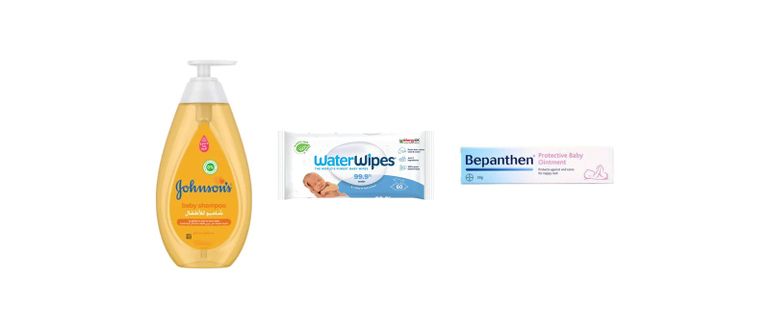
- WaterWipes Baby Wipes, 60 wipes and WaterWipes Sensitive, 4 packs (240 wipes) from WaterWipes.
- Johnson’s Baby Extra Sensitive Wipes, 168 wipes from Johnson’s: made for very sensitive baby skin and suitable for newborns, according to the description.
- Huggies Baby Wipes: described as fragrance-free with a high pure-water content.
See more in baby wipes.
How do you prevent diaper rash?
Keep the area clean and dry, change often and avoid tight diapers. HealthyChildren explains that the most common rash is irritant rash from prolonged contact with urine and stool.
- Change often: lingering moisture makes skin chafe.
- Clean gently: water and a gentle non-soap cleanser when skin is irritated.
- Dry well: pat gently and let the skin air-dry.
- Use a barrier cream: HealthyChildren says zinc oxide and petrolatum are both good choices and fragrance-free products are best. Ask a pharmacist if unsure, and browse baby skincare.
- Try another brand: if rashes keep returning, switching diapers or wipes may help.
Some diapers are designed to help protect skin, such as Pampers Anti-Rash and the fragrance-free Huggies Extra Care, but they do not replace frequent changes.
When to see a pediatrician
HealthyChildren advises calling your pediatrician if the rash is not better or worsens after two to three days of care, shows pimples, blisters, peeling or oozing, crusty sores, comes with fever, or is especially painful.
Comparison of the best baby diapers available
| Product | Brand | Best for | Key feature |
|---|---|---|---|
| Huggies Extra Care Size 6 | Huggies | Over 15kg, nights | Up to 12 hours, fragrance-free |
| Huggies Premium Care Size 4 | Huggies | 8 to 14kg | Stretchy waistband |
| Huggies Newborn Size 1 | Huggies | Up to 5kg | High absorbency, 128 diapers |
| Pampers Premium Care Size 1 | Pampers | Newborns | Soft on sensitive newborn skin |
| Pampers Complete Comfort Size 3 | Pampers | Babies | Leak protection, strong absorbency |
| Pampers Pants Size 5 | Pampers | Active toddlers | Flexible pull-on design |
| Baby Joy Size 4 Jumbo | Baby Joy | Everyday use | Large pack, 96 diapers |
| Baby Joy Compressed Size 3 | Baby Joy | 6 to 12kg | High absorbency, 104 diapers |
| Teemo Size 4 | Teemo | Everyday use | High absorbency, leak protection |
How to choose the right diaper: a practical checklist
- Weigh your baby: know the current weight before you buy.
- Read the pack: compare the weight range, not just the size number.
- Pick the type: tabs for young babies, pants for active ones.
- Plan for nights: higher absorbency and a fit that is not tight.
- Mind sensitive skin: fragrance-free diapers and wipes.
- Test first: try a small pack, then buy the value box once the size is right.
- Buy from a trusted source: all Care Outlet products are original and come from the brands’ official agents inside and outside Saudi Arabia, as explained in our article on Care Outlet product authenticity.
Common mistakes
- Choosing by age: weight is what counts.
- Assuming sizes match across brands: the same number can mean different weights.
- Fastening too tightly: traps moisture and marks the skin.
- Delaying changes: moisture and urine are the main causes of rash.
- Overbuying newborn size: babies can outgrow it fast.
- Ignoring a lasting rash: see a pediatrician if it does not improve.
Frequently asked questions
What are the best baby diapers?
The best diapers fit your baby’s weight and skin without leaks or red marks. For newborns, Pampers Premium Care or Huggies Newborn work well; for everyday use, Huggies Premium Care or Baby Joy; for nights, Huggies Extra Care. Trying a small pack first helps you find the best fit.
How do I know which diaper size my baby needs?
Go by your baby’s current weight and the range printed on the pack, not age. Because charts differ between brands, check each pack: size 3, for example, means 4 to 9kg for Huggies Premium Care but 6 to 12kg for Baby Joy Compressed. If your baby is between sizes, the larger one is usually better.
When should I change diaper size?
When your baby nears the top of the current weight range, the elastic leaves red marks at the waist or thighs, leaks keep happening, or the tabs barely close. The American Academy of Pediatrics suggests considering a larger size if the elastic leaves red marks, because tight diapers trap moisture.
How many diapers does a baby need a day?
Newborns can go through as many as 8 to 12 diapers a day, according to HealthyChildren, and the number falls gradually as they grow. The general rule is to change every three to four hours or as soon as the diaper is soiled, so value packs make sense once you are sure of the size.
What is the difference between diapers and pants?
Regular diapers fasten with tabs, making changes easy while your baby lies down, so they suit young babies. Pants pull on and off like underwear and suit babies who crawl, stand or move a lot, such as Pampers Pants or Baby Joy Pants. Choose them by weight too.
How can I protect my baby from diaper rash?
Change every three to four hours or as soon as the diaper is soiled, clean gently, let the skin dry, choose wipes free of alcohol and fragrance, apply a fragrance-free barrier cream when needed, and avoid tight diapers. If the rash does not improve in two to three days, or blisters or fever appear, see your pediatrician.
Where to buy original baby diapers
The baby diapers section at Care Outlet has Huggies, Pampers, Baby Joy and Teemo in every size, plus pants, and baby essentials covers the rest of your baby’s needs, online or at our branches across Saudi Arabia.