
Frizzy hair usually happens when hair loses moisture and its outer layer (the cuticle) lifts, so strands absorb humidity from the air and puff up. In most cases the fix is not a single product but a simple routine: regular moisture from conditioner and a hair mask, a leave-in cream or hair serum after washing, less heat and gentler drying. This guide explains why hair gets frizzy and how to choose the right product for your hair type, with picks from L'Oréal Paris, Fino and Color Wow.
Quick answer
- Frizz is a sign of dry strands or a damaged outer layer, and it gets worse in humid weather and after coloring or heat styling.
- Conditioner after every wash is the foundation, with a moisturizing mask once or twice a week for dry hair.
- Leave-in creams suit thick and curly hair, while serums and oils work for most hair types in small amounts on the ends.
- Rubbing hair dry with a towel and brushing it while soaking wet are among the habits that most increase frizz and breakage.
- Use low or medium heat with a heat-protecting product, and use flat irons and blow dryers as little as possible.
Why does hair get frizzy?
Hair turns frizzy when its outer cuticle is damaged or loses its natural oils, making the strand absorb more water and feel less smooth. Each hair has three layers, and the one that matters here is the cuticle, made of overlapping scales like shingles on a roof. A review published by the US National Library of Medicine (NIH) explains that the cuticle is covered by a lipid layer that makes hair water-repellent, and that gradual "weathering" from daily grooming, chemical treatments and environmental exposure contributes to tangling and frizz.
The most common causes
- Dryness: naturally dry hair, and curly hair in particular, gets less of the scalp's natural oils along its length.
- Humidity: in coastal cities such as Jeddah and Dammam, dry hair soaks up moisture from the air and swells.
- Heat: blow dryers, flat irons and curling irons weaken the cuticle with repeated use.
- Chemical treatments: coloring, bleaching and chemical straightening raise hair porosity.
Curly hair vs frizzy hair: what is the difference?
Curly hair is a natural hair type with a regular wave or coil pattern, while frizz is a state that can affect any hair type when strands fly away and lose their shape. Having curls does not mean your hair is damaged; with curly hair the goal is to moisturize and define curls, not to straighten them. The American Academy of Dermatology (AAD) advises learning your hair type first, whether straight, coarse, fine or curly, and choosing products labeled for that type.
How do you moisturize frizzy hair? Start with conditioner and masks
Moisture is the foundation: conditioner after every wash, plus a mask once or twice a week. The AAD notes that conditioner moisturizes and detangles hair and makes it easier to manage, and that dry or curly hair should get conditioner along its entire length, while fine hair only needs it on the ends. Choosing the right shampoo matters too, so see our guide to the best shampoo for your hair type.
Masks for dry, damaged hair
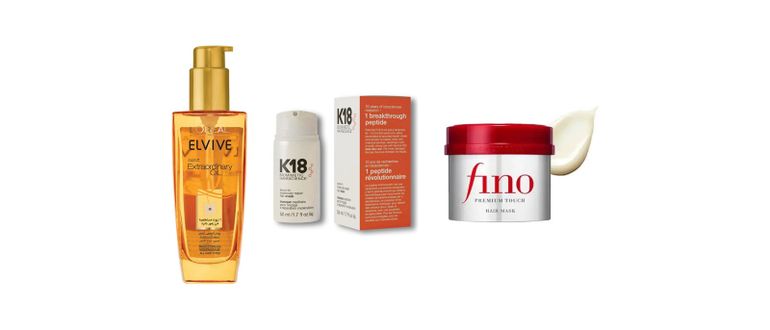
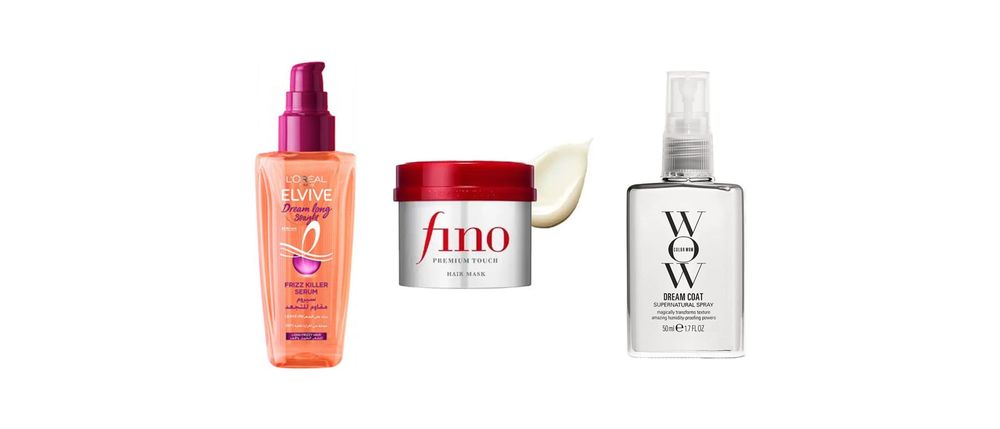
A mask is richer than conditioner and stays on for a few minutes. A popular choice is the Fino Shiseido Hair Treatment Mask 230g with royal jelly extract, made to moisturize and smooth dry, damaged hair. For hair stressed by color or styling there is the Absolut Repair Mask 250ml from L'Oréal Professionnel, with gold quinoa and protein to nourish dry, damaged hair. You will find more options in the Hair Oils & Masks section.
Leave-in cream, serum or hair oil: which one do you need?
A leave-in is a moisturizer you do not rinse out, a serum is a light liquid that coats the strand for smoothness and shine, and an oil nourishes dry ends. The right choice depends on how thick and how dry your hair is.
Leave-in cream: for thick and curly hair
Creams suit hair that is clearly dry or curls that need definition. Good examples are the L'Oréal Elvive Glycolic Gloss Leave-In Cream 200ml, described as boosting shine and smoothness with frizz control, and the Cantu Leave-In Conditioner 453g from Cantu. For curls specifically there is the Skala Perfect Curls Conditioning Cream 1000g from Skala, which can be used as a styling cream or a mask to moisturize and define curls and tame frizz. Browse more in Hair Creams.
Serum: for smoothness and flyaways
Serums suit fine and medium hair because they are light and do not weigh strands down. A standout is the L'Oréal Elvive Frizz Killer Serum 100ml, which according to its description is lightweight, non-greasy and silicone-free, reduces static, and protects against heat up to 230°C when applied before hot tools. Another option is the Giovanni Ultra Smoothing Anti-Frizz Serum 81ml from Giovanni.
Hair oil: for dry ends and shine
A few drops of oil go on the ends after washing or on dry hair for shine. The Fino Hair Treatment Serum Oil 70ml moisturizes and smooths dry hair and adds shine without weighing it down, while the Elvive Extraordinary Oil Serum for Dry Hair 50ml targets dry hair with nourishment, shine and less frizz. If you prefer pure oils, try Parachute Organic Virgin Coconut Oil 200ml from Parachute as a pre-wash oil treatment.
How do you protect hair from humidity?
The best defense against humidity is well-moisturized hair plus a product that forms a barrier on the strands. Dry hair is thirsty, so if its cuticle stays open it pulls moisture from the air and puffs up. That is what the Color Wow Dream Coat Anti-Frizz Spray 50ml is designed for: according to its description it is a very light mist that seals hair against water even in heavy humidity and adds shine.
Does heat styling cause frizz, and how do you protect your hair?
Yes, frequent high heat is one of the most common causes of dry, brittle, frizzy hair. The AAD recommends air-drying when possible, using the lowest heat setting, limiting how long a hot tool touches the hair, and using these tools about once a week or less, along with a product that protects hair from heat.
Drying steps that do not add frizz
- After rinsing, gently squeeze hair with a towel or cotton T-shirt instead of rubbing.
- Detangle with a wide-tooth comb: curly hair while damp, straight hair after it has dried a little.
- Apply a leave-in cream or a few drops of serum to damp hair.
- If you blow-dry, use low or medium heat and point the airflow from roots to ends.
The Hair Care Devices section has dryers and styling tools, and Hair Brushes has combs suited to detangling.
Do coloring and bleaching cause frizz?
Yes, coloring, bleaching and chemical straightening raise hair porosity, so hair becomes drier and frizzier. The AAD suggests spacing out color touch-ups, having only one chemical service at a time, and if you need both, relaxing or perming first and coloring two weeks later, with conditioner after every wash. For hair damaged by bleach, color and heat there is the K18 Leave-In Repair Mask 15ml from K18, a mask you leave in. If you color at home, read our home hair color guide for patch-test steps.
Comparison of the best products for frizzy hair
| Product | Brand | Best for | Key feature |
|---|---|---|---|
| Elvive Frizz Killer Serum 100ml | L'Oréal Paris | Long frizzy hair before heat styling | Light, silicone-free, reduces static, heat protection up to 230°C |
| Fino Shiseido Mask 230g | Fino | Dry, damaged hair | Royal jelly extract for moisture, smoothness and shine |
| Color Wow Dream Coat 50ml | Color Wow | Humid weather | Light mist that seals hair against moisture and adds shine |
| Elvive Glycolic Gloss Leave-In 200ml | L'Oréal Paris | Dull hair that needs shine | Leave-in cream for shine, smoothness and frizz control |
| Fino Serum Oil 70ml | Fino | Dry ends | Moisturizes and smooths without weighing hair down |
| Skala Perfect Curls 1000g | Skala | Curly and wavy hair | Styling cream or mask to define curls and tame frizz |
| K18 Leave-In Repair Mask 15ml | K18 | Bleached or colored hair | Leave-in mask, no rinsing |
| Cantu Leave-In 453g | Cantu | Thick, dry hair | Leave-in conditioner to moisturize and nourish |
| Absolut Repair Mask 250ml | L'Oréal Professionnel | Colored, damaged hair | Gold quinoa and protein for nourishment and softness |
How to choose the right anti-frizz product
- Know your hair type: fine, thick, curly, or colored and damaged.
- Fine hair: choose a light serum or spray and apply it to the ends only.
- Thick or curly hair: choose a rich leave-in cream and spread it through damp hair.
- Colored or bleached hair: add a mask for damaged hair once or twice a week.
- If you use heat: never start without a product labeled as heat protection.
- If you live somewhere humid: finish with an anti-humidity product after styling.
A simple weekly routine
- Every wash: shampoo on the scalp only, conditioner on the lengths, then a leave-in or serum.
- Once or twice a week: a moisturizing mask instead of conditioner.
- Once a week if needed: a pre-wash oil treatment on the ends.
- Every day: a smooth pillowcase and a loose hair tie.
For more detail, read our step-by-step hair care routine.
Common mistakes that make frizz worse
- Scrubbing shampoo into the lengths: the AAD advises massaging the scalp only and letting the lather run through the lengths as you rinse.
- Skipping conditioner: for dry hair, conditioner after every wash is essential, not optional.
- Combing straight hair while soaking wet: wet hair is fragile, so let it dry a little and use a wide-tooth comb.
- Using too much serum or oil: large amounts leave hair greasy and heavy; start with one or two drops.
- Putting oil on right before a flat iron: use a dedicated heat protectant instead.
- Tight hairstyles: a tight ponytail stresses hair; choose a loose style and covered hair ties.
Frequently asked questions
What is the best cream for curly, frizzy hair?
There is no single best cream; the right one depends on how thick your hair is. Thick curly hair benefits from a rich leave-in such as Skala Perfect Curls or Cantu Leave-In, while long hair that tends to fly away may only need a lighter cream such as Elvive Glycolic Gloss.
What is a leave-in and how do you use it?
A leave-in is a moisturizing product you apply after washing and do not rinse out; it can be a cream, spray or mask. Spread it over damp hair after conditioner, starting at the ends and working up, avoiding the scalp if it gets oily, then comb through with a wide-tooth comb.
Does hair serum help frizzy hair?
Yes. A serum coats the strand, adds smoothness and shine and reduces flyaways, and it suits most hair types, especially fine and medium hair. Use a small amount on damp or dry hair from mid-length to ends, and pick one with heat protection if you use hot tools.
How can I get rid of frizz quickly?
For a quick fix, rub one or two drops of serum or hair oil between your palms and smooth them over the surface of your hair, or use an anti-humidity spray. The lasting fix is regular moisture from conditioner and masks, less heat and gentle drying.
Why does my hair get frizzier in summer and humid weather?
Dry hair absorbs water vapor from the air, so strands swell and lose their shape. Keep hair moisturized with conditioner and masks, then add a barrier product such as an anti-humidity spray or serum, and tie hair loosely when needed.
When should I see a doctor?
Frizz on its own is usually a cosmetic issue, but if you notice heavy breakage, noticeable shedding, thinning patches, or an itchy, inflamed scalp, see a dermatologist to find the cause.
Start your smooth-hair routine
Smooth, manageable hair comes from a consistent routine more than from any single product. In the Hair Care section at Care Outlet you will find original products from the brands' official agents, including Shampoo & Conditioner, Hair Creams and Hair Styling Products, online or at our branches across Saudi Arabia.